Thursday, May 15, 2008

Cormac McCarthy


I just finished reading No Country for Old Men, and I loved it. I was wanting to read The Road for my first McCarthy, but it was checked out from the library. To be honest, for the first 100 pages, I wasn't sure sure. The fact that I had seen the film several months before seemed to be a real distractor--the book follows the film very, very closely. But once I was immersed into the book's world, I was still hooked--especially by Bell's monologues, which are slightly downplayed in the film (although still very important). I have a confession to make. I am now so intrigued by McCarthy's mind and world, that I actually joined Oprah's Book Club so I could see her interview with him (it's free to join!). This is the only television interview he has ever done. In the process, I found a great blog called When Cormac Met Oprah..., and it turns out that someone I vaguely knew from my distant Memphis scenester past is the author of it!
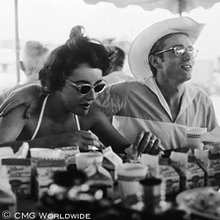
Here they are--Cormac and Oprah: what an unlikely pair.

If you are a McCarthy fan, I would love to hear your thoughts on which book I should read next and why--what's your favorite? And--confession time--are you now in the Oprah Book Club as well?! I leave you all with a great section from Bell's opening monologue in Chapter V-he's talking about the oral tradition of family history: The stories get passed on and the truth gets passed over. As the sayin goes. Which I reckon some would take as meanin that the truth cant compete. But I dont believe that. I think that when the lies are all told and forgot the truth will be there yet. It don't move from place to place and it dont change from time to time. You cant corrupt it any more than you can salt salt. You cant corrupt it because that's what it is.

Monday, May 12, 2008

The Religious Imagination: Page France, Sufjan Stevens, Half Handed Cloud, Danielson Family, and oh so Many others...


Danielson Famile
In a follow up of sorts to my last blog post, I wanted to post this abstract of a paper I will be giving at an upcoming Popular Culture conference. More to come as I work on the presentation--should be fun!
"(Im)personal Jesus: Rebirth of the Religious Imagination in US Indie Rock"
In a recent article from Pitchfork Media, columnist Chris Dahlen claims that “ there is almost no strain of music as secular as indie rock” and asks why “hipsters hate Jesus”. In the context of an irony saturated indie rock subculture, in which the proclamation of “truth” is not considered sacred, but profane, a selection of musicians are creating songs that are deeply subversive and uncharacteristically countercultural in their relentless search for meaning. This growing community of indie rock artists has given birth to a postsecular musical Renaissance, creating music pregnant with questions about mystery, transcendence, religious wonder, and personal doubt. Musicians such as Sufjan Stevens, Page France, Half Handed Cloud, the Danielson Famile, and many others continually challenge the “truth” claims of what they see as a media-induced virtual paradigm that has become the surrogate for a “traditional” religious one. All of these musicians are well versed in the glossy texts of their culture; they ironically bring the products, ads, films, and shopping spaces that we call home into the foreground of their work. They use these postmodern texts as tools to not only critique the seductive metanarrative that has nurtured their own popularity, but also to create space for spiritual exploration. This combination of biblical and contemporary consumer metaphors opens up a new, relevant discussion of an “ancient future” faith. The rise, and surprising acceptance, of these faith-focused indie performers has also instigated the emergence of anonymous online communities that discuss what were previously considered to be “outmoded” ideas of faith. Along with the song lyrics themselves, I plan to read these virtual patterns of faith discussion within the emerging texts of chat communities, online reviews, and Mp3 Blogs. This shockingly earnest and imaginative music has instigated a new conversation, a reflexive dialogue, that continually re-interprets questions of both faith and doubt for its audience.


Friday, May 9, 2008

Paul Tillich, Sufjan Stevens, and Douglas Coupland: On Words That Need "Healing"


I was just reading the introduction to theologian Paul Tillich's Dynamics of Faith. In discussing the term "faith" he says this: "It belongs to those terms which need healing before they can be used for the healing of men. Today the term "faith" is more productive of disease than health...Indeed, one is tempted to suggest that the word "faith" should be dropped completely...".I really like this brief point about the seeming "corruption" and decontextualization of religious terminology. So many of our theological terms have become much more associated with commodity, scientific rationalism, and strangely systematic "religion" rather than mystery, wonder and devotion. Tillich ultimately argues that we can't drop a word such as "faith" as there is no other adequate term to replace it--and we need a label for this mystical "thing" that we discuss. We must re-invest it with the meaning it has lost in such a confused cultural context. But how do we do this? I don't want to try and answer this now, but raise the question. One thing that I think is very much needed is a new amount of respect and excitement for the religious imagination. We need to rely more on metaphors and imagination--concrete, creative descriptions of mysterious spiritual realities, rather an attempt to concretize through abstractions, reducing these words to correlating "scientific" principles concerning God and belief.
All of this discussion reminds me of my blog's first ever post, which looks at how Sufjan Stevens provides an awe-ful, rich description of the phrase "born again". Take a look here. I also appreciate how an author such as Douglas Coupland attempts to re-invest the often completely secularized (in the mind of contemporary society) term "apocalypse" with its prophetic, colorful, frightening and beautiful roots. Of course, this discussion (of Coupland) calls for an entire new blog post (or a 325 page dissertation!).

Wednesday, May 7, 2008

Review of Fear of Flying


I have obviously been on a DKD streak these last few months; please check out my new review on Identity Theory of his lovely new album.

Wednesday, April 9, 2008

Looking Through David Karsten Daniels' Rear Window

This weekend I will be in North Carolina, first for a Christianity and Literature conference, then for a visit and interview with the guys from the Buhanan Collective in Chapel Hill.
David Karsten Daniels, one of the founding members of the collective and now a solo artist on Fat Cat records, has a fantastic new album called Fear of Flying coming out in late April. I have listened to the album over and over and love its slow, engrossing warmth--it takes patience, time, concentration to appreciate. I like music that takes time--and DKD's music, both minimal and lush--leaves much space for contemplation.
Here is the first single off of the album--a catchy, short number called "Martha Ann"mp3.
And here is a real treat--DKD and his sister singing a lovely acapella version of "Martha Ann" in the car:

This song is obviously one of the album's more upbeat offerings. The rest of the album, which deals primarily with familial relationships and ways of coping with death, is much more sparse. The last song, "Evensong" is very moving, soft, final--a delicate rendering of The Lord's Prayer accompanied by the music of locusts.
The albums's first song, "Wheelchairs" is what gave this post its name (which you will understand after watching the following video). If you have made it thus far, click below, watch the flickering images, listen to the words--and just let it all simmer:

Thursday, March 20, 2008

Beautiful, Challenging Words For Easter


A Section from "East Coker" in T.S. Eliot's Four QuartetsIV

The wounded surgeon plies the steel
That questions the distempered part;
Beneath the bleeding hands we feel
The sharp compassion of the healer's art
Resolving the enigma of the fever chart.

Our only health is the disease
If we obey the dying nurse
Whose constant care is not to please
But to remind of our, and Adam's curse,
And that, to be restored, our sickness must grow worse.

The whole earth is our hospital
Endowed by the ruined millionaire,
Wherein, if we do well, we shall
Die of the absolute paternal care
That will not leave us, but prevents us everywhere.

The chill ascends from feet to knees,
The fever sings in mental wires.
If to be warmed, then I must freeze
And quake in frigid purgatorial fires
Of which the flame is roses, and the smoke is briars.

The dripping blood our only drink,
The bloody flesh our only food:
In spite of which we like to think
That we are sound, substantial flesh and blood—
Again, in spite of that, we call this Friday good.

Thursday, March 6, 2008

Music Review: Bon Iver


I have just written my first (in a long time, since college really) album review which is up on my favorite new online magazine,Identity Theory. The subject of the review, Bon Iver's For Emma, Forever Ago, is lovely-full of energy, raw honesty, life. Please do take a look at the review; I would love any feedback. I strongly recommend that you buy this album immediately--you won't be disappointed.
Here is the most well-known, perhaps catchy, track from the album: "Skinny Love" mp3


Also, above is the lovely, atmpospheric video for Bon Iver's "The Wolves (Act I&II).