Friday, May 23, 2014

Buber, Sufjan, Coupland: What is a REAL Relationship?


During Wednesday’s lunch discussion, we talked about this perplexing statement from one of Andrew Fellow’s lectures: “The now, the present, is the only place where Reality exists.” Fellows is making a strong claim—that reality is found in the midst of relationship- and that Real reality must be experienced in the present. As you can imagine, it took us the full 1.5 hour lunch discussion time to attempt to unravel this.

Fellows’ excellent lecture focuses on the distinctions that philosopher Martin Buber makes between “I-Thou” relationships and “I-It” relationships. An “I-It” relationship is a relationship in which we relate to another person based solely on what they can do for us, for how they make us feel. An “I-Thou” relationship is one in which we appreciate, listen to, and live in a perpetual state of wonder as we encounter another person’s “otherness.” In a sense, an “I-It” relationship is viewing and relating to another according to his/her use value, whereas an “I-Thou” relationship is viewing and relating to another based on a deep conviction that the other is inherently valuable (not just valuable because of what he/she can do for you). “I-Thou” relationships are hard, so we slip in between these two modes of relating. We often objectify those who “serve” us in society (waiters, janitors, cashiers) according to an “I-It” way of relating. We see them merely as people put in place to make our lives function smoothly, to help us get what we want. How hard would it be to take a moment to actually stop, look into the other’s eyes, speak directly to them, acknowledging their humanity?Even these fleeting interactions can move from the realm of “I-it” to “I-Thou.” But we are culturally trained to focus merely on getting what we want, and getting it is quickly as possible.

The “I-It” relationship model is not practiced simply in consumer transactions; sometimes, a supposedly “deep” or “real” interpersonal relationship becomes an act of consumption. We see the other as someone to complete us, to fulfill our needs, to “fix us” (as the annoying Coldplay song about codependence says). The other person’s importance solely lies in what he/she can give us. In this sense, our supposed friend or beloved becomes an object whose purpose is to please us, to give us pleasure. An “I-Thou” relationship is not without pleasure—but the pleasure it engenders is from finding joy in the other person’s being—and even finding joy in serving the other person—as opposed to looking to the other as a means to the end of our individual happiness.

Another way that relationships can easily slip into an “I-It” model is when we attempt to create the object of our supposed friendship or love in our own image. We can easily project our own image onto theirs and supposedly love them because they fit our needs to exactly. Of course, projections that deludes us into believing another looks and behaves like us does not meet our true needs (which are to be sharpened and challenged, among other things) but lead us to deeper narcissism. Sufjan Stevens’ complex album The Age of Adz is the story of such an “I-It” relationship. The album begins with Stevens proclaiming “I do love you” multiple times. What follows is a jagged, chaotic, frenzied and beautiful mess that reflects the mind of the lover as he navigates the relationship. The album ends with the following confession that this relationship was not love, but objectification and narcissism:

“I never meant to cause you pain
My burden is the weight of a feather
I never meant to lead you on
I only meant to please me, however

And then you tell me, boy, we can do much more
Boy, we can do much more
Boy, we can do much more together

I'm nothing but a selfish man
I'm nothing but a privileged peddler
And did you think I'd stay the night?
And did you think I'd love you forever?
And then you tell me, boy, we can do much more

I got to tell you, girl, I want nothing less
Girl, I want nothing less
Girl, I want nothing less than pleasure

I got to tell you, boy, we made such a mess
Boy, we made such a mess
Boy, we made such a mess together

Interestingly, Stevens' album tells a parallel story of the inner world of schizophrenic folk artist Royal Robertson. The “love” relationship that Stevens depicts becomes a kind of delusional schizophrenia as he projects his own reality onto his lover.

When talking about this song with a good friend several years ago, he made a poignant, thought provoking remark: “Don’t Christians do that with Jesus? Project themselves onto Him?” I do not remember the exact words—but the gist was that perhaps Christians were projecting their own image onto God. Objectifying Him. This insightful and honest question came from a friend who is agnostic—so the question is perhaps, on a deeper level, whether there is a real Jesus or if He is a complex web of our projections.

I do believe that Jesus is real, that He existed as a historical human being, God incarnate entering our time-constricted history. But I also believe that we often project our image on Him, make the relationship into an “I-It” one rather than an “I-Thou” one. And of course, the relationship between humanity and God is THE ultimate “I-Thou” relationship; without this relationship to nourish us, is it even possible to move past “I-It” relationships?

Douglas Coupland’s collection of short stories Life After God asks this very question as it tells the fractured stories of those who have been unable to have Real relationships, who resort to irony as a protective coating to prevent any more pain. Coupland shows us that in this postreligious culture, even some who call themselves “Christians” do just what my friend suggested: project their needs onto Jesus, using him as an object to meet their present need instead of recognizing the mystery, power, and reality of His brilliant Otherness.

I think it is clear that it is a human tendency to objectify and consume the other, whether the other is another human being or God. But I also believe that we were made for relationships. In our lunch discussion we emphasized that the trinity is relational, the three parts of the Godhead are constantly relating to one another. And if we are made in the image of God, then we are inherently relational; this is both our model and our nature. But our nature is also fallen—so we so often turn the wonderful complexity and mystery of the other into an object to be consumed.

This takes us back to Fellows’ quote from “What is a Relationship:” “The now, the present, is the only place where reality exists.”

What does this have to do with either the “I-It” or “I-Thou” models? I have also heard Fellows mention in his lectures that “The present is where we meet God.” Of course, scripture tells us to “Be still and know that I am God.” But what does Fellows mean by the notion that “Reality exists” in the present?

A lengthy section in Pascal’s Pensees is perhaps helpful in this regard:

“We never keep to the present. We recall the past; we anticipate the future as if we found it too slow in coming and were trying to hurry it up, or we recall the past as if to stay its too rapid flight. We are so unwise that we wander about in times that do not belong to us, and do not think of the only one that does, so vain that we dream of times that are not and blindly flee the only one that is. The fact is that the present usually hurts.

Pascal’s claim that we have a hard time keeping to the present, that the present “hurts,” relates very much to his idea that we need to sit alone in a room, to be still, in order to really think about our condition. We will soon find that it is “wretched,” and that we need God (these are all Pascal’s ideas). We meet God in the present moment. It is frightening because if we focus on the here and now we see our own brokenness and need and incompleteness.

But how does this relate to the “I-Thou” and “I-It” categories? I have gone over this in my mind and realized that when we live in the past or future, both God and others are objects within our minds; they are not living, dynamic Others. The present is unpredictable. Buber claims that anytime we have a true “I-Thou” encounter, we are changed. And this must happen in the present because we cannot control it. If we live in the past or future, we are shaping things into our own image—our romanticized notions of the past, our desires for the futures.

I still find Fellows’ comment a challenging, complex notion. But one worth chewing on: “The now, the present, is the only place where Reality exists.”

**I recommend listening to two of Andrew Fellows' excellent lectures if this topic interests you: "What is a Relationship" (quoted here) and "The Sacrament of the Present Moment."
Both can be found for free download here.


Lunch Table Discussions: the Heart of L'Abri


I have a post up here at Relief Journal about some things that have really struck me this go round about L'Abri's philosophy and practice. The rest of this post is a more specific example of the kind of conversation that reflects this philosophy (as is the post on Buber/Sufjan that follows it).
***************************************************************************************
This Tuesday’s lunch discussion is a beautiful example of the vulnerability, humility, and trust it takes to ask an honest question. A young Korean student—someone who has been very shy and quiet thus far in the term—spoke up almost immediately after the worker asked if anyone had a question.

She said: “How do we eliminate prejudice from our hearts?”. After asking this, and giving several examples from her experience, she said that seeking an answer to this question was the main reason she has come to L’Abri (she will be here for the entire three month term). We then ended up spending a good amount of time discussing what the student meant by the use of the term “prejudice”--we often spend a lot of time at table discussions defining terms—and I have learned that this is a way to begin to truly hear another person rather than assume that I know what he/she means. Our discussion ended up focusing more on the idea of judging another person because of his/her behavior as opposed to holding prejudice towards a different race, nationality, or class.


The worker at the head of the table made an interesting distinction between the necessary act of judging actions and the problematic/unhelpful/sinful embracing of “judgementalism” as a worldview. There was a consensus that we must judge actions if we believe in justice; as another worker said “We must have judgements. Without judgement, there is no forgiveness.” In other words, if we never judge, then we do not recognize either evil or goodness. But this is also tricky when encountering another person and, if practiced non-relationally—as simply following a set of rules, it can so easily lead to an attitude of self-righteousness. It can also prevent us from truly seeing that other person. When we take the time to truly hear someone else’s story and begin to understand the motives and reasons for their actions, we often see that it is not such a simple binary  (black/white) issue. The question I was left with was this: Although I agree that we need to judge whether an action is right or wrong (but even that is hard because sometimes we do not have enough information and might judge incorrectly), I wonder if it is right to actually judge a person as a good person or a bad person. I am inclined to say no; I believe that only God can really know this. And that the “line of good and evil” (as both Dostoevsky and NT Wright call it) runs right through the heart of each human being. The practice of capital punishment implies that we can judge a person’s worth fully and say when they have become so inhuman that they deserve to no longer live. But where is the hope for redemption? The acknowledgement that God’s image is in each individual?

Wednesday, May 7, 2014

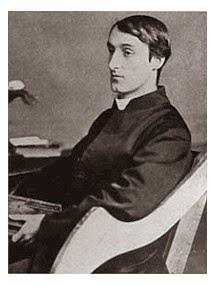
Finding Comfort in "Carrion Comfort"


Students in my Humanities survey class had to write three short essays at the end of the semester. In the third--and the one always the most fascinating to read--they are asked to select a few works from the semester and explain how these works have challenged, affirmed, or even altered their world views (keep in mind that they have been reading Marx, Darwin, Nietzsche, O’Connor, Sartre, Coupland, Spiegelman, etc). Although this is a more reflective essay (the first two are more traditionally academic), I find that it is very important for students to have the opportunity to think in writing about how these works of philosophy and literature CAN become a part of their own spiritual formation (by the way, I provide another essay option if anyone does not want to write on something that can be so personal). I want them to think through how what we are reading in the classroom is not cloistered off from the world outside the classroom --or from their internal worlds.


I am often humbled when reading these essays, especially in seeing some revelations that I certainly had not planned or anticipated (thus indicating that what I am teaching and what the students read is not really under my control, but that the Holy Spirit does things far beyond my own imagination). One example (and there are many) has just really struck me as a perfect example of this. One student wrote about "Carrion Comfort," one of Gerard Manley Hopkins' "Terrible Sonnets," poems about spiritual depression and doubt. Of course, Hopkins, a devout Jesuit, is more known for his beautiful praise poems such as "God's Grandeur" and "Pied Beauty" (and I spent much more time on these, actually).


But this student says that this one line from "Carrion Comfort" has "changed my life": "I wretch lay wrestling with (My God!) my God."


I barely spent any time on this line in class--but it was used to transform this student's thinking. Several students were moved by Hopkins' poetry which helped them to be honest about their own doubts and struggles. And several felt a sense of freedom and encouragement in recognizing that this devout believer could both earnestly and beautifully praise God, yet also have dark nights of the soul. The seemingly contrasting poems actually interrogate a sometimes false binary of doubt/faith--and express that perhaps doubt and honest admission of struggle can be a part of faith (an honest, complex faith) rather than a denial of it.


"Carrion Comfort" by Gerard Manley Hopkins

Not, I'll not, carrion comfort, Despair, not feast on thee;
Not untwist — slack they may be — these last strands of man
In me ór, most weary, cry I can no more. I can;
Can something, hope, wish day come, not choose not to be.
But ah, but O thou terrible, why wouldst thou rude on me
Thy wring-world right foot rock? lay a lionlimb against me? scan
With darksome devouring eyes my bruisèd bones? and fan,
O in turns of tempest, me heaped there; me frantic to avoid thee and flee?


Why? That my chaff might fly; my grain lie, sheer and clear.
Nay in all that toil, that coil, since (seems) I kissed the rod,
Hand rather, my heart lo! lapped strength, stole joy, would laugh, chéer.
Cheer whom though? the hero whose heaven-handling flung me, fóot tród
Me? or me that fought him? O which one? is it each one? That night, that year

Of now done darkness I wretch lay wrestling with (my God!) my God. 


Thursday, March 6, 2014

Clear Eyes, Full Hearts: Learning to See

In the pilot episode of the NBC’s Friday Night Lights, star quarterback of the Dillon Panthers, Jason Street, is about to lead a group of peewee football players in prayer when one of the inspiring athletes asks, “Mr. Street, do you think that God loves football?” to which Jason earnestly replies “I think that everyone loves football.” Although this might be true in the fictional Dilllon, a small Texas town that closes all of its businesses on Friday afternoon in order to focus its attention the object of its devotion, this was not true in the small suburb of Germantown, Tennessee in the 1980’s.
My high school football team won the state championship many times under the guidance of my best friend’s father, a decorated and highly respected coach. Our cheerleaders were also national champions. Although I did attend one football game my freshman year, eager to ascend the high school hierarchy by showing my support of the untouchable players and their bubbly cheerleader girlfriends, my attentions and allegiances quickly turned elsewhere. Within a year’s time, I was dressed all in black, wearing karate shoes and dark red lipstick, going to the Antenna club to punk shows, and sitting at the “cool” table in the lunchroom, where a lot of time was spent talking about good art, good music—and how much we disliked football and the social system that it seemingly upheld. We made some good points—but we were also sometimes self-righteous, arrogant, critiquing the process of labeling by, ironically, doing it ourselves.

Fast forward twenty years(ish): Two of my most thoughtful and culturally savvy friends encourage me to watch what they see as the best show on network TV, Friday Night Lights. I started watching it one evening, and realizing it was about football, immediately began to question the taste level of my friends: how could these artistic, complex, critical thinkers watch a show about football? 

But I pressed on and, although football was and still is a foreign language to me, I grew to love football because these characters that I grew to love love it. And I realized that Friday Night Lights is a show very much about learning how to truly see another human being, how to peel back the layers of all too easy stereotypes to expose raw, painful, and beautiful humanity.  

The above comments provide the context and background story for how I fell in love with this show. My brief analysis of some elements of the show itself can be found on the Relief Journal Blog.


Wednesday, March 5, 2014

Ash Wednesday: Teach us to Care and Not to Care


Tonight I went to the first Ash Wednesday service that I have ever attended. A new friend invited me for dinner and then to attend the service. I had many things to do, and it was a long drive home. But I now know that it was the most important place that I have been in a long time. It was beautiful, sobering, Real. After my friend, Reverend Al Allison, put ashes on my head in the shape of the cross and said "The scripture says, 'From dust you came, and dust you shall return,' I was struck by this visible reminder that we truly do not own ourselves, that we do not have control of our origin or our end. God's grace enables us to recognize and participate in our ultimate end in Him, yet so much else is a mystery. We are trained by our culture to despise mystery, to despise surrendering control. The lush, seemingly absurd, and utterly fulfilling beauty of God's lavish grace is subversive in a culture that claims that the ultimate sins are boredom and lack of control (which are often connected). We must be entertained, and be in charge of that entertainment; it must please us in a simplistic, formulaic way that gives us a false sense of security and depth as we are spoon fed the very ideals that have taught us to hate mystery, wonder, and a recognition of our lack of control.

Tonight I realized that the more we try and control our lives, the more chaotic our lives become. This is such a simple truth--but it was a great revelation, a needed revelation to me. I pray that I will allow myself to be still and linger in the mystery enough that that revelation is not forgotten, swept under the rug of feigned control and depthless entertainment.

On my drive home, I kept thinking that I needed to read TS Eliot's "Ash Wednesday" when I got home. I am less familiar with this poem than many of his others, and I also knew that tonight's experience would cast a new light on the poem. Here it is in its entirety. But I wanted to highlight just a few lines that are really poignant to me, right now, directly after this service and my realizations about our lack of control:

And pray to God to have mercy upon us
And pray that I may forget
These matters that with myself 
I too much discuss
Too much explain...


Teach us to care and not to care
Teach us to sit still

Even among these rocks,
Our peace in His will

And even among these rocks...


If the lost word is lost, if the spent word is spent
If the unheard, unspoken
Word is unspoken, unheard;
Still is the unspoken word, the Word unheard,
The Word without a word, the Word within
The world and for the world;
And the light shone in darkness and
Against the Word the unstilled world still whirled
About the centre of the silent Word.


During communion, we sang along with "Come Thou Fount of Every Blessing" (Sufjan's version). Perhaps you are like me and the "prone to wonder Lord I feel it" is often the line that resonates the most deeply. But this is the line that takes me back to the lack of control, and to one of the most reassuring pleas in scripture: "I do believe; help me overcome my unbelief!". Amen.


Monday, March 3, 2014

Zbigniew Preisner: Blue and The Tree of Life


In revisiting Kieslowski's masterpiece, Blue, in class today, I was again deeply moved by the beautiful musical composition that actually tells the story itself. It is Julie's love, her loss, her grief, her ache. 
In the last scene of the film, we finally hear the dramatic ending to the "Song for the Unification of Europe." I am writing this short entry (and hope to write a longer one tomorrow about the film itself) just to call attention to the music of Zbigniew Preisner, a composer whose work is not merely beautiful, but almost frighteningly sublime--and to post links to his compositions from both Blue (posted above) and The Tree of Life.
In the creation scene from the Malick film, we hear the "Lacrimosa" portion of Preisner's "Requiem for a Friend," the deeply stirring piece of music that he wrote for his friend, Kryzysztof Kielowski's, funeral. When I discovered this connection, I was amazed. So I wanted to share this in case anyone else is a fan of both films and did not know this, or just wanted to take a minute to watch/listen to both scenes again.


Sunday, March 2, 2014

A Hollywood, White, Glam Jesus and Comments about "Christian" Art

"He had no beauty or majesty to attract us to him/ nothing in his appearance that we should desire him./ He was despised and rejected by mankind/ a man of suffering, and familiar with pain./ Like one fromwhom people hid their faces/ He was despised, and we held him in low esteem." Isaiah 53:2-3
I am guessing that I am not the only one that sees the huge disconnect between Isaiah's description of the prophesied suffering servant and the image on the poster for the new Son of God film.
First, a disclaimer: I have not seen this film. And I generally get annoyed when people write off things that they have not yet seen. I may or may not see it. But I am interested here in just saying a few words about the marketing and reviews of this film, as well as some deeper considerations about "Christian art" that both the reviews and online conversations instigate.

As for the choice of actor not "fitting" the biblical description: I do not have huge problems with some artistic liberties when re-narrating biblical stories. After all, there are many things that we are not directly told and must imagine. What I do have a HUGE problem with is a film about Jesus  that  (seemingly) conforms more to superficial American marketing standards than to the heart of the gospel narratives, the point that Christ came as a suffering servant, that his birth, life, and even death were not glamorized, marketed, or airbrushed for mass appeal. Again, I have not seen this film so I can only speak to the marketing--and this image of Jesus, as well as others that I have seen from the film, really concerns me. Many critics, Christian and not, have commented on the "sexy," model Jesus. It seems to me that marketing a desirable, easy on the eyes, sexy Jesus is completely missing the point of the gospel itself and pandering to a desired target market. Of course, producer Mark Burnett (Survivor, The Apprentice) is no stranger to glam Hollywood formulas.

My second thought about this film deals more with the reviews and conversations surrounding it. Both some Christian and "secular" reviews have commented that the film is mediocre, bland, not well made, --a somewhat tired cataloguing of "Jesus' greatest hits." None of the reviews that I have read have been snarky or mocking of the biblical story; if anything, they are disappointed that such a glorious, beautiful, complex story is told in such a mundane, one dimensional fashion. The best review I have read yet is from The Washington Post. The critic commends the film for its earnestness, but speaks of it as very underwhelming art.

I have a problem with a biblical narrative being made as underwhelming "art." A big problem.  This speaks to the theologically problematic "Christian" cultural view that the quality of the art does not matter as long as it conveys a good message. Of course, then one begins to ask the difference between art and propaganda (I am not saying that this film is propaganda--but I am questioning the often made claim that aesthetics don't matter and are even worldly).

I also have a problem with the idea that critiquing a "Christian" work of art is anti-Christian. We have to separate the reality of the biblical narrative, the mysterious, human, God Jesus Christ himself from a human ret-telling of the story. The story can be told in an unhelpful, shallow way. It can also be told in a way that leads us to ask more questions, puts us in a state of wonder, urges us to become angry at injustice and thirst for righteousness. Good art can put us in this state of mind when it tells the truth. Of course, I do not even think we need another human re-narration of this story to put us in this state of mind as we already have the gospels. But if one does attempt to retell the story, it should be breathtaking, difficult, challenging, revolutionary. It should be true.

On a side note, it would be interesting to compare Pasolini's beautiful film The Gospel of Saint Matthew to the more recent depictions of the gospel narratives. Pasolini's film is gorgeous, powerful art. Most of his actors are Italian peasants, not really actors. Pasolini, a Marxist atheist, made this film after reading the Gospel of Matthew one night in a hotel room. He was utterly captivated and had to retell the story. Of course, his artfully made film does have an agenda; his Jesus is a Marxist revolutionary, whose care for the poor is his central focus. And he also is crucified and resurrected. But the film does leave us in a state of awe and mystery...

My last point is a response to a quote from the above mentioned Washington Post article: "But Downey and Burnett clearly mean for their film to make an impact not as an aesthetic experience, but as a spiritual one." I could write pages in response to this very problematic statement concerning its false dichotomy; this is an old debate. It makes me deeply sad that many Christians do not see that an aesthetic experience can and should be a spiritual experience. Instead, there is still the widespread idea that Christian art should be purely functional, a (shallow) and uplifting way to reenforce what you think you already know. If the art we encounter is not changing us, we need to start questioning it.

 If anything, Christians should spend the most attention on making complex, glorious, even sublime art to point toward the author of complexity, glory, the sublime. So much "Christian art" peddles one dimensional, sentimental pictures of reality; Christians, of all people, should recognize the infinite beauty, complexity, and mystery of life, of ourselves, of God. Making films and art from a seemingly Christian perspective that flattens reality seems, at best, deceptive and shallow and, at worst, heretical. In "The Church and the Fiction Writer", Flannery O'Connor argues that when we partake in sentimental art, we arrive at a mock state of innocence, perhaps even ignoring the need for the cross. Any "Christian" depiction of a sanitized, one dimensional, comfortable reality is a false one, one that ignores the great mystery, beauty, and tragedy of the human condition. Good art should tell us the truth, remind us that we need beauty, grace, and redemption from our own brokenness.